Basement Flooding Cleanup in Spokane, WA
About a third of Spokane homes have basements, and they take on water from groundwater, runoff, seepage, and backups. Local crews respond fast to pump it out and dry the space.
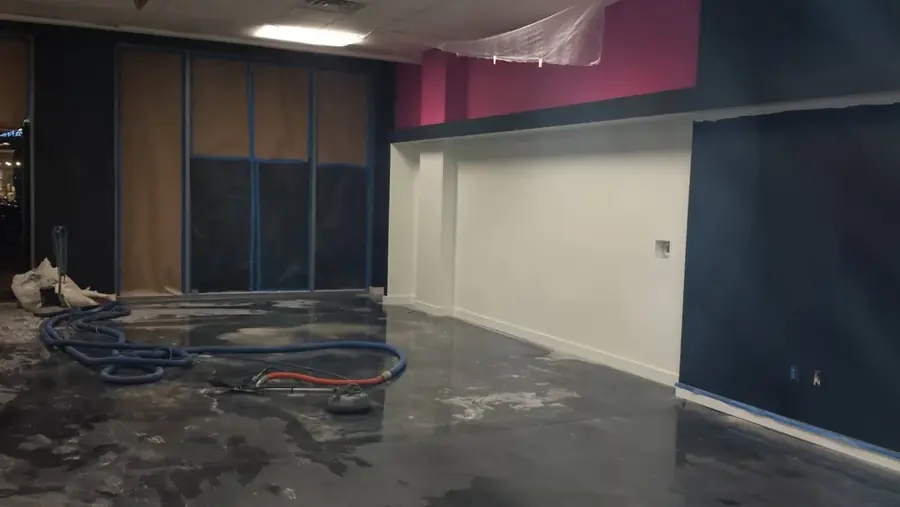
How Basement Flooding Cleanup is handled in Spokane
Call & dispatch
The response team answers 24/7, and the nearest crew heads out with pumps, air movers, and moisture meters.
Assess & stop it
The crew finds the source and moisture-maps how far the water traveled, into subfloors, wall cavities, and below grade.
Extract & dry
The extraction crew pulls the standing water, then runs air movers and low-grain dehumidifiers to a verified dry standard.
Verify & document
Crews log the readings until the structure is dry, then document the loss with photos and daily moisture logs for the claim file.
Roughly a third of Spokane homes have a basement, and those spaces sit low enough to collect whatever water the ground and the weather push toward the foundation. Because the basement is the bottom of the house, water finds its way in and pools, soaking framing, flooring, and anything stored down there. Local crews respond fast to pump it out and dry the space.
How water gets into a Spokane basement
Basement flooding is about where the water comes from, not one single failure. Several sources can push water in, sometimes at once.
- Groundwater rising against the foundation and forcing through cracks
- Surface runoff from heavy rain or grading that slopes toward the house
- Seepage through foundation walls, cold joints, and the floor slab
- Sewer and floor-drain backups pushing water up from below
This is different from a sump pump failure, where the pump that was supposed to keep the pit clear simply quit. It also differs from snowmelt and spring runoff flooding, which is a seasonal surge of meltwater. Basement flooding can happen any time water finds the low point. The federal flood guide warns to stay out of standing water near outlets and panels until the power to that area is off.
What gets done first
Speed protects the structure and your belongings. Local crews pump the standing water and get contents up before the drywall wicks it higher.
- Pump and vacuum standing water with truck-mounted and portable units
- Pull water from carpet, pad, and behind baseboards
- Move stored contents up and out to protect what can be saved
- Check whether the water is clean, gray, or a sewage backup
If the water came up through a floor drain or the sewer, it is contaminated and becomes sewage and black water cleanup, which local crews handle with the right protection and disinfection. The EPA offers practical steps for returning to a flooded building safely, including drying materials quickly to limit mold.
Drying a basement so it stays dry
Basements hold humidity, so a dry-out that would finish upstairs in days can take longer down low. Spokane crews meter and monitor until the numbers confirm it is done.
- Air movers and dehumidifiers sized for the below-grade humidity
- Removing saturated pad, baseboard, and the bottom of wet drywall
- Antimicrobial treatment where water sat against porous material
- Daily moisture readings until framing and slab are back to normal
Full water extraction paired with proper structural drying is what keeps a flooded basement from turning into a mold problem months later.
A flooded basement soaks everything low. Call now and a Spokane crew heads your way.
☎ Call (509) 236-9148Why Spokane calls the local pros first
Rapid local response
The response team answers 24/7, and the nearest crew heads out the moment you call, across Spokane and Spokane County.
IICRC S500 drying standard
Trained crews with truck-mounted extractors, air movers, and moisture meters dry to a verified standard, not a mop and a fan.
Claim-ready documentation
The loss is documented with photos and daily moisture readings, the paperwork an adjuster needs to move a claim.
Local water experts
Frozen and burst pipes, ice dams, snowmelt, and flooded basements, so the local pros know how water moves in an Inland Northwest home.
Spokane and Spokane County covered.
Rapid local response across the region, 24/7. Here is where the local crews work, down to the ZIP.
Local crews cover all of Spokane and Spokane County, day or night, with rapid local response.
Coverage runs across South Hill, Downtown, the North Side, Hillyard, Spokane Valley, Liberty Lake, Cheney, and Airway Heights.
See every neighborhood and ZIP covered ›