Storm Water Damage Restoration in Spokane, WA
Inland Northwest windstorms drive rain through roofs and windows. Local crews extract the water, dry the structure, and tarp the opening, county-wide.
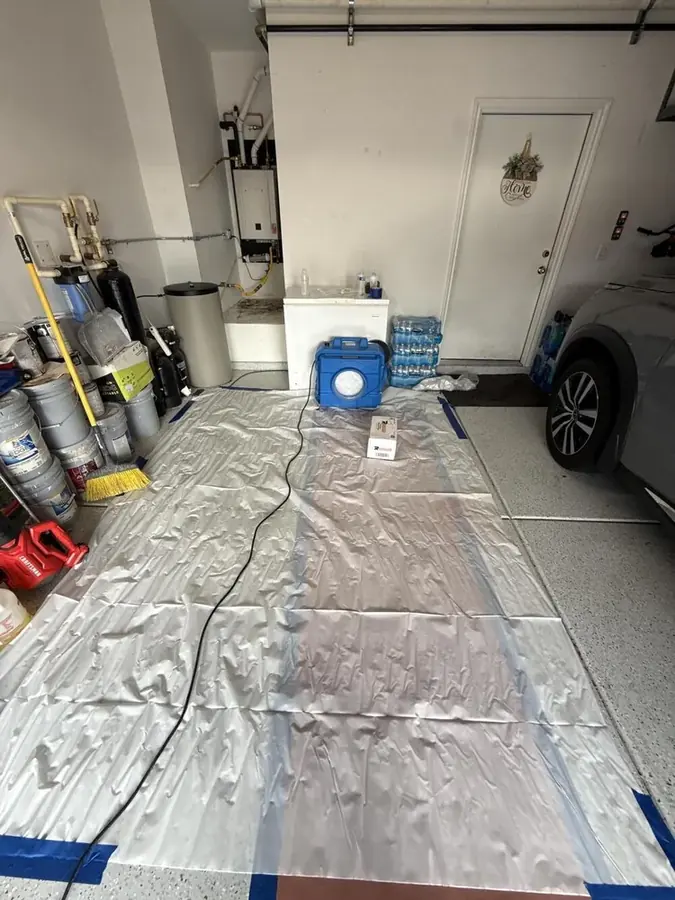
How Storm Water Damage Restoration is handled in Spokane
Call & dispatch
The response team answers 24/7, and the nearest crew heads out with pumps, air movers, and moisture meters.
Assess & stop it
The crew finds the source and moisture-maps how far the water traveled, into subfloors, wall cavities, and below grade.
Extract & dry
The extraction crew pulls the standing water, then runs air movers and low-grain dehumidifiers to a verified dry standard.
Verify & document
Crews log the readings until the structure is dry, then document the loss with photos and daily moisture logs for the claim file.
Inland Northwest windstorms drive rain sideways and drop limbs on roofs, and the water is often inside before the wind lets up. A punctured roof or a blown-out window can soak ceilings, walls, and floors in a single storm. Local crews respond fast to extract the water and start drying.
How a storm puts water in your home
Storm water finds the weak points in the building the moment the wind picks up. The federal flood and storm safety guide is a useful reminder that even a short, violent storm can move a lot of water inside.
- Wind-driven rain forced past window seals, door thresholds, and siding
- A downed limb punching through the roof deck and letting rain into the attic
- Torn shingles and lifted flashing that open the roof mid-storm
- Gutters overwhelmed by a downpour, spilling straight against the foundation
The Spokane storms that cause it
The National Weather Service Spokane office tracks the windstorms and thunderstorms that hit the region hardest, from the big autumn wind events to fast summer cells.
- Autumn and spring windstorms with gusts strong enough to snap limbs onto roofs
- Summer thunderstorms that dump heavy rain in minutes
- Hail and flying debris that crack skylights and lift shingles
- Tall, aging trees in older neighborhoods like West Central and Emerson-Garfield
This is not the same as a winter ice dam, where trapped meltwater backs up under the shingles, and it is different from spring snowmelt runoff off the yard.
The storm water cleanup
Once the intrusion is stopped, the work is fast extraction and a controlled dry-out, plus the board-up so the next band of rain stays out.
- Emergency extraction of standing water from floors, ceilings, and wall bases
- Structural drying of drywall, insulation, and framing with daily meter readings
- Tarping and board-up coordination with Washington contractors
- Antimicrobial treatment where storm water sat against porous material
If the storm water ran down into a finished basement, local crews treat that as basement flooding as well. Photos and daily moisture logs documented for the claim file.
Storm water spreads fast once it is inside. Call now and a Spokane crew is on the way.
☎ Call (509) 236-9148Why Spokane calls the local pros first
Rapid local response
The response team answers 24/7, and the nearest crew heads out the moment you call, across Spokane and Spokane County.
IICRC S500 drying standard
Trained crews with truck-mounted extractors, air movers, and moisture meters dry to a verified standard, not a mop and a fan.
Claim-ready documentation
The loss is documented with photos and daily moisture readings, the paperwork an adjuster needs to move a claim.
Local water experts
Frozen and burst pipes, ice dams, snowmelt, and flooded basements, so the local pros know how water moves in an Inland Northwest home.
Spokane and Spokane County covered.
Rapid local response across the region, 24/7. Here is where the local crews work, down to the ZIP.
Local crews cover all of Spokane and Spokane County, day or night, with rapid local response.
Coverage runs across South Hill, Downtown, the North Side, Hillyard, Spokane Valley, Liberty Lake, Cheney, and Airway Heights.
See every neighborhood and ZIP covered ›