Roof and Ice Dam Leak Cleanup in Spokane, WA
Winter ice dams push meltwater under your shingles and into the attic. Local crews extract the trapped water and dry the attic and ceilings, county-wide.
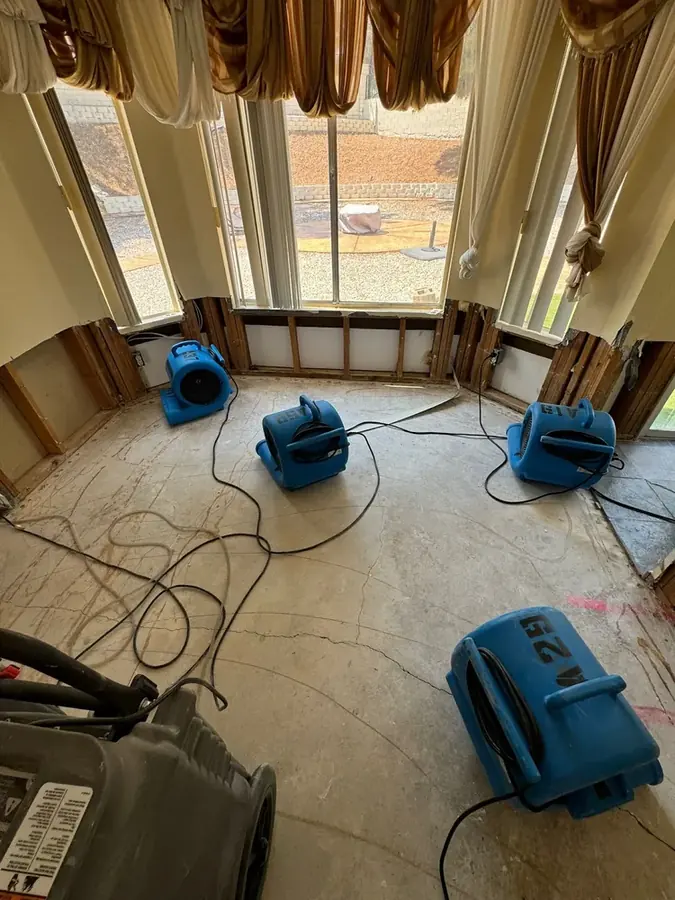
How Roof is handled in Spokane
Call & dispatch
The response team answers 24/7, and the nearest crew heads out with pumps, air movers, and moisture meters.
Assess & stop it
The crew finds the source and moisture-maps how far the water traveled, into subfloors, wall cavities, and below grade.
Extract & dry
The extraction crew pulls the standing water, then runs air movers and low-grain dehumidifiers to a verified dry standard.
Verify & document
Crews log the readings until the structure is dry, then document the loss with photos and daily moisture logs for the claim file.
A hard Spokane winter builds ice along the cold edge of the roof, and the dam forces meltwater back up under the shingles and into the attic. From there it soaks the insulation, tracks along the rafters, and stains the ceilings below. Local crews respond fast to dry the attic and the rooms the water reached.
How an ice dam forms and leaks
An ice dam is a winter cycle, not a one-time leak. Warm attic air melts the snow on the roof, the water runs to the cold eaves and refreezes, and the growing dam traps more water behind it. The federal winter weather guide covers the attic insulation and ventilation steps that break that cycle.
- Heat escaping into the attic that melts the snowpack on the roof deck
- Meltwater refreezing at the cold eaves into a ridge of ice
- Water pooling behind the dam and wicking up under the shingles
- Thin attic insulation and poor ventilation feeding the whole cycle
Roof leaks beyond the ice
Not every winter roof leak is an ice dam. The National Weather Service Spokane office tracks the winter storms that batter aging roofs across the region.
- Cracked or lifted flashing around chimneys, vents, and skylights
- Worn or wind-torn shingles on older Manito and Comstock homes
- Nail pops and failed rubber boots on plumbing vents
- Valleys carrying heavy melt that finds any gap
When the water shows up on a ceiling but the source is an upstairs bathroom or a supply line rather than the roof, that is a ceiling leak. Snow that melts into the yard instead of the attic is spring runoff.
Roof and ice dam cleanup, step by step
Local crews dry the roof envelope from the attic down, so the water that got in does not rot the framing or ruin the ceilings.
- Extraction of trapped water from the attic and ceiling cavities
- Drying of insulation, framing, and drywall with daily meter readings
- Structural drying of the rooms below where the water stained through
- Coordination with Washington roofers for the flashing or shingle repair
Photos and daily moisture logs documented for the claim file, and local crews note the moisture readings so the attic is signed off truly dry.
Ice dam water rots an attic quietly. Call now and a Spokane crew is on the way.
☎ Call (509) 236-9148Why Spokane calls the local pros first
Rapid local response
The response team answers 24/7, and the nearest crew heads out the moment you call, across Spokane and Spokane County.
IICRC S500 drying standard
Trained crews with truck-mounted extractors, air movers, and moisture meters dry to a verified standard, not a mop and a fan.
Claim-ready documentation
The loss is documented with photos and daily moisture readings, the paperwork an adjuster needs to move a claim.
Local water experts
Frozen and burst pipes, ice dams, snowmelt, and flooded basements, so the local pros know how water moves in an Inland Northwest home.
Spokane and Spokane County covered.
Rapid local response across the region, 24/7. Here is where the local crews work, down to the ZIP.
Local crews cover all of Spokane and Spokane County, day or night, with rapid local response.
Coverage runs across South Hill, Downtown, the North Side, Hillyard, Spokane Valley, Liberty Lake, Cheney, and Airway Heights.
See every neighborhood and ZIP covered ›