Sewage and Black Water Cleanup in Spokane, WA
A sewage backup is a health hazard, not just a mess. Local crews contain it, extract it, remove what cannot be saved, then disinfect and dry, safely, across Spokane.
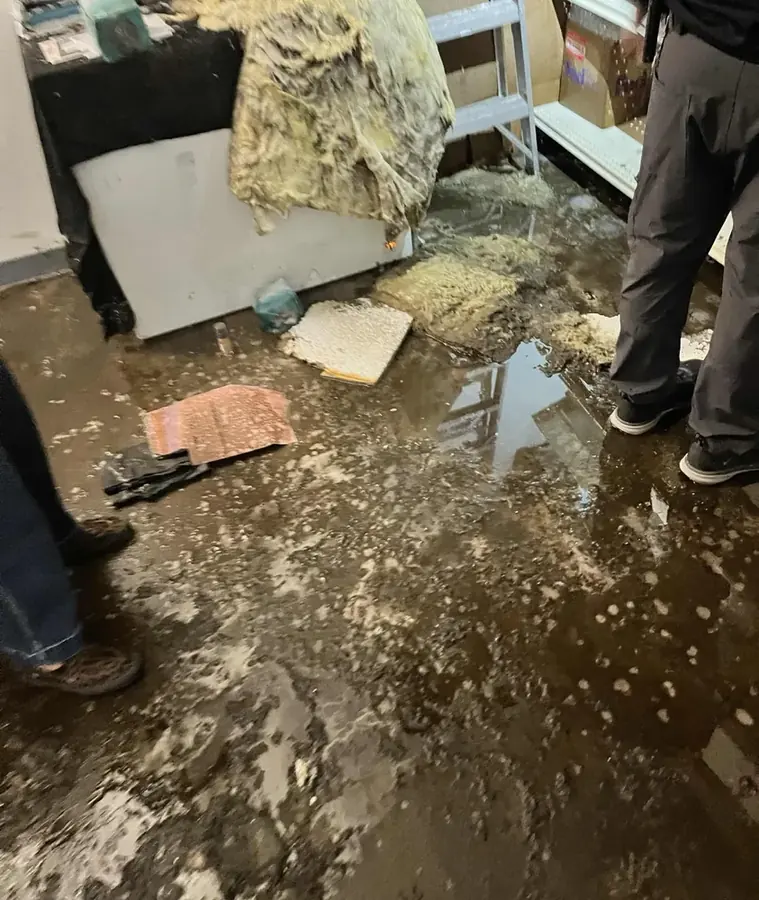
How Sewage is handled in Spokane
Call & dispatch
The response team answers 24/7, and the nearest crew heads out with pumps, air movers, and moisture meters.
Assess & stop it
The crew finds the source and moisture-maps how far the water traveled, into subfloors, wall cavities, and below grade.
Extract & dry
The extraction crew pulls the standing water, then runs air movers and low-grain dehumidifiers to a verified dry standard.
Verify & document
Crews log the readings until the structure is dry, then document the loss with photos and daily moisture logs for the claim file.
Sewage in the home is the worst kind of water loss. It is what the industry calls Category 3, or black water, and it carries bacteria and other contaminants you do not want your family near. When a line backs up into a Spokane basement or a fixture overflows, local crews treat it as the health hazard it is and clean it that way.
Why Spokane sees black water losses
A lot of the housing here is older, and the sewer lines under it are older too. Roots, grease, and collapsed clay or cast pipe all slow a line until it backs up, and the water finds the lowest fixture in the house.
- Aging main sewer lines in older neighborhoods like Hillyard, Logan, and East Central
- Tree roots and buildup choking a line until waste has nowhere to go but back inside
- Basement floor drains and low toilets that overflow first when the main is blocked
- Heavy rain or snowmelt overwhelming an already struggling line
Because so many Spokane homes have basements, the backup usually lands on a finished lower level, soaking flooring, drywall, and stored belongings all at once. That is why this is different from clean water intrusion. The contamination, not just the moisture, drives the whole job.
How Spokane crews clean a sewage backup
The order matters with black water. Local crews isolate the area first so nothing spreads, then remove the contamination before anything gets dried.
- Contain the affected area and set up controlled access so the mess stays put
- Extract the black water and remove sludge and solids
- Dispose of unsalvageable porous materials like soaked carpet, pad, and drywall
- Disinfect all hard surfaces, then deodorize to kill the smell at the source
The CDC is direct that porous items soaked with sewage usually cannot be saved and should be discarded, and its flood cleanup safety guidance spells out the protective steps the crews follow. Trying to rinse and keep contaminated carpet is how a health hazard lingers in a home.
Drying and preventing what comes next
Only after the contamination is gone do restoration crews dry the structure, because sewage left in damp materials is exactly the moisture problem that leads to mold.
- Structural drying with meters after the area is disinfected, see the structural drying service
- Coordination with a plumber where the sewer line itself needs repair
- Follow-through on basement flooding when the backup reached a finished lower level
The EPA moisture control guidance notes that lingering dampness is what feeds mold, so a proper dry-out is the last safeguard after the cleanup. Water Damage Spokane documents the loss and bills your carrier directly where the policy allows.
Sewage is a health hazard. Do not clean it yourself, call for a safe cleanup now.
☎ Call (509) 236-9148Why Spokane calls the local pros first
Rapid local response
The response team answers 24/7, and the nearest crew heads out the moment you call, across Spokane and Spokane County.
IICRC S500 drying standard
Trained crews with truck-mounted extractors, air movers, and moisture meters dry to a verified standard, not a mop and a fan.
Claim-ready documentation
The loss is documented with photos and daily moisture readings, the paperwork an adjuster needs to move a claim.
Local water experts
Frozen and burst pipes, ice dams, snowmelt, and flooded basements, so the local pros know how water moves in an Inland Northwest home.
Spokane and Spokane County covered.
Rapid local response across the region, 24/7. Here is where the local crews work, down to the ZIP.
Local crews cover all of Spokane and Spokane County, day or night, with rapid local response.
Coverage runs across South Hill, Downtown, the North Side, Hillyard, Spokane Valley, Liberty Lake, Cheney, and Airway Heights.
See every neighborhood and ZIP covered ›